Manchester is a city and metropolitan borough in Greater Manchester, England. Often referred to as the ‘capital of the North’, it was the world’s first industrialised city and has held city status since 1853. It had a population of 552,000 in the 2021 census. Greater Manchester is the third-most populous metropolitan area in the United Kingdom and the largest in Northern England, with the same census recording a population of 2.87 million.
The history of Manchester began with the civilian settlement associated with the Roman fort (castra) of Mamucium or Mancunium, established c. AD 79 on a sandstone bluff near the confluence of the rivers Medlock and Irwell. Throughout the Middle Ages, Manchester remained a manorial township but began to expand “at an astonishing rate” around the turn of the 19th century. Manchester’s unplanned urbanisation was brought on by a boom in textile manufacture during the Industrial Revolution and resulted in its becoming the world’s first industrialised city. Historically part of Lancashire, areas south of the River Mersey were incorporated into Manchester in the 20th century, including Wythenshawe in 1931. Manchester achieved city status in 1853. The Manchester Ship Canal opened in 1894, creating the Port of Manchester and linking the city to the Irish Sea, 36 miles (58 km) to the west. The city’s fortunes declined after the Second World War, owing to deindustrialisation. The IRA bombing in 1996 led to extensive investment and regeneration. Manchester was the host city for the 2002 Commonwealth Games.
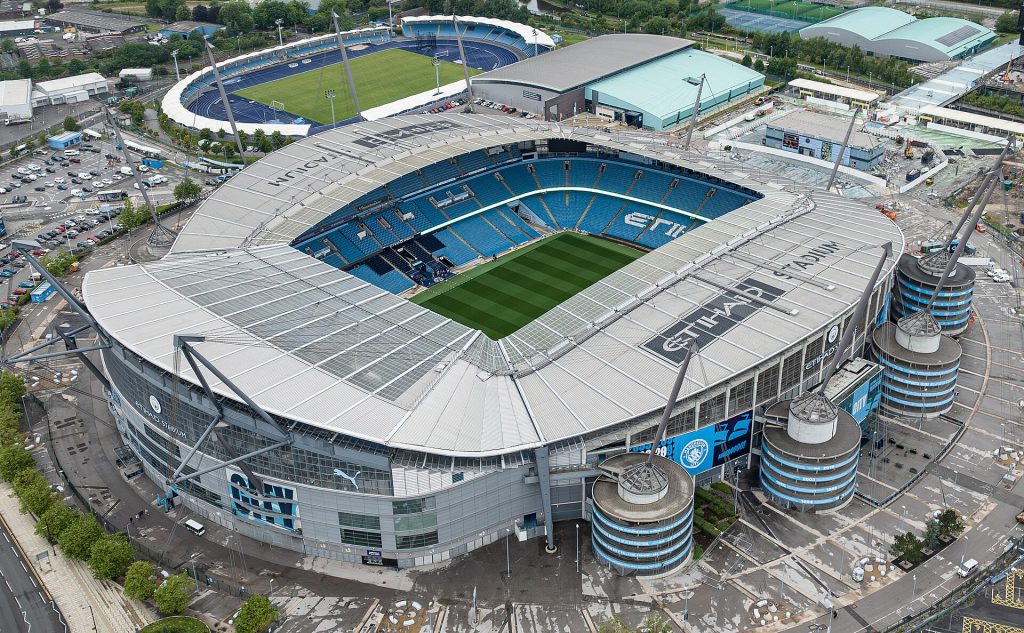
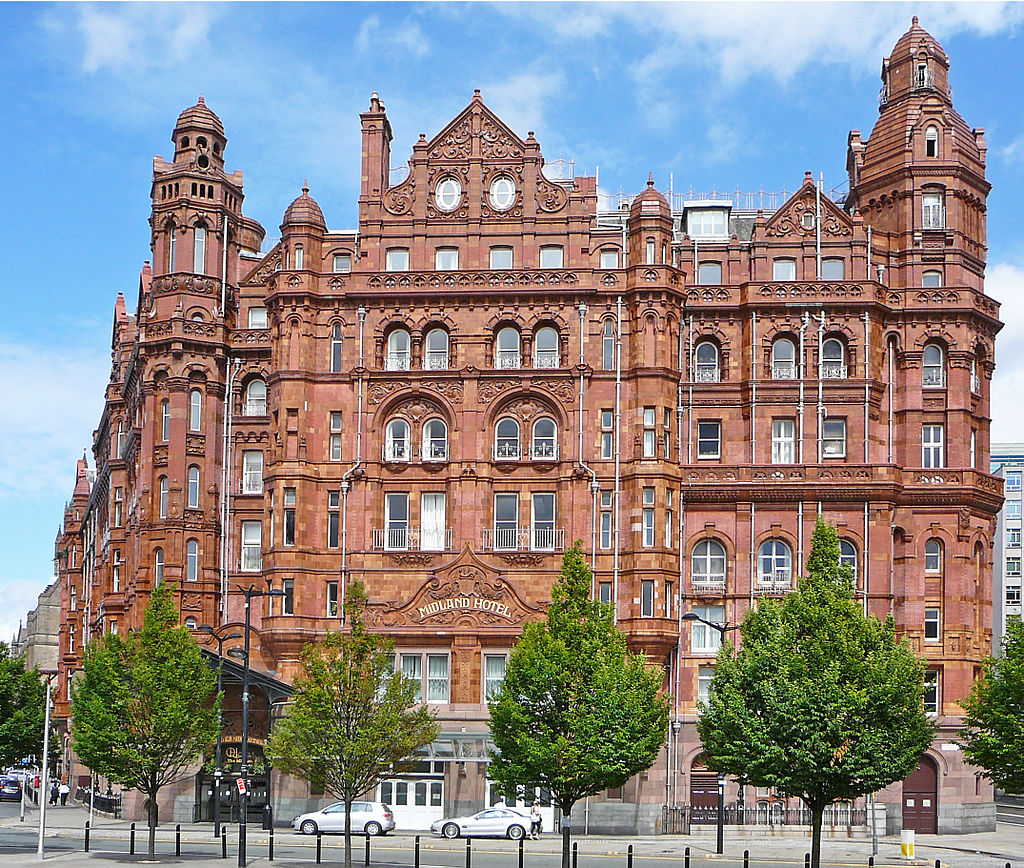
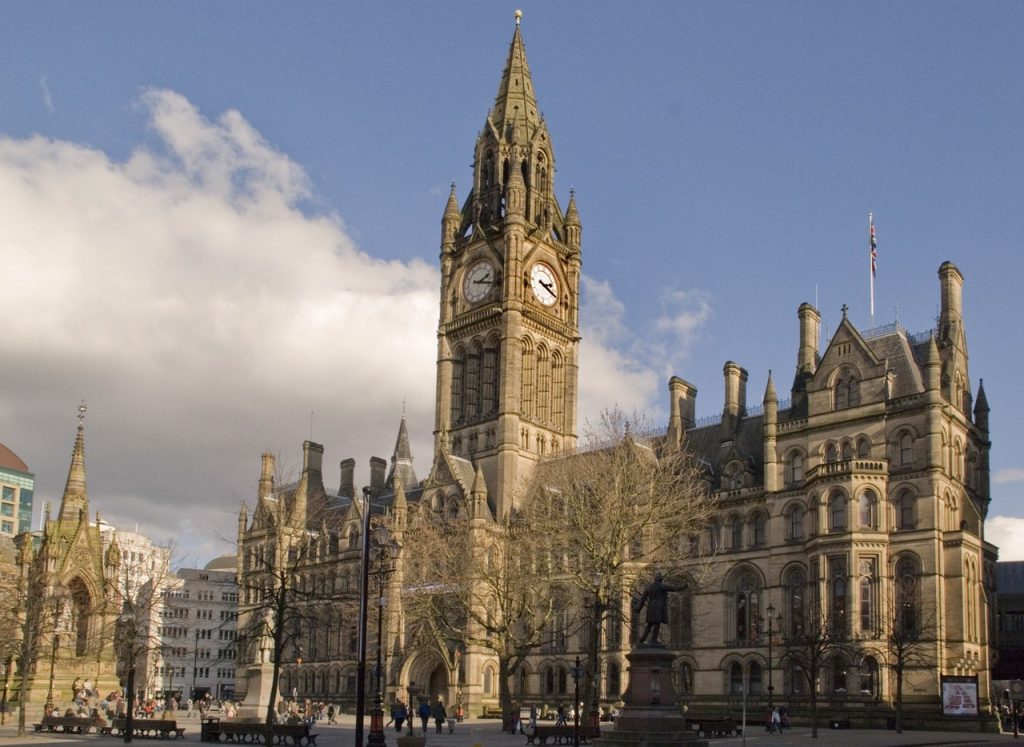
The city is considered notable for its architecture, culture, higher education, musical exports, media links, scientific and engineering output, social impact, sports clubs and transport connections. Manchester Liverpool Road railway station is the world’s oldest surviving inter-city passenger railway station. At the University of Manchester, Ernest Rutherford first split the atom in 1919; Frederic C. Williams, Tom Kilburn and Geoff Tootill developed the world’s first stored-program computer in 1948; and Andre Geim and Konstantin Novoselov first isolated graphene in 2004. The city has also been praised for the extent of its urban regeneration after deindustrialisation and the 1996 IRA bombing, with buildings such as the Corn Exchange being repurposed as modern venues.